
Kube 4000 Energizer
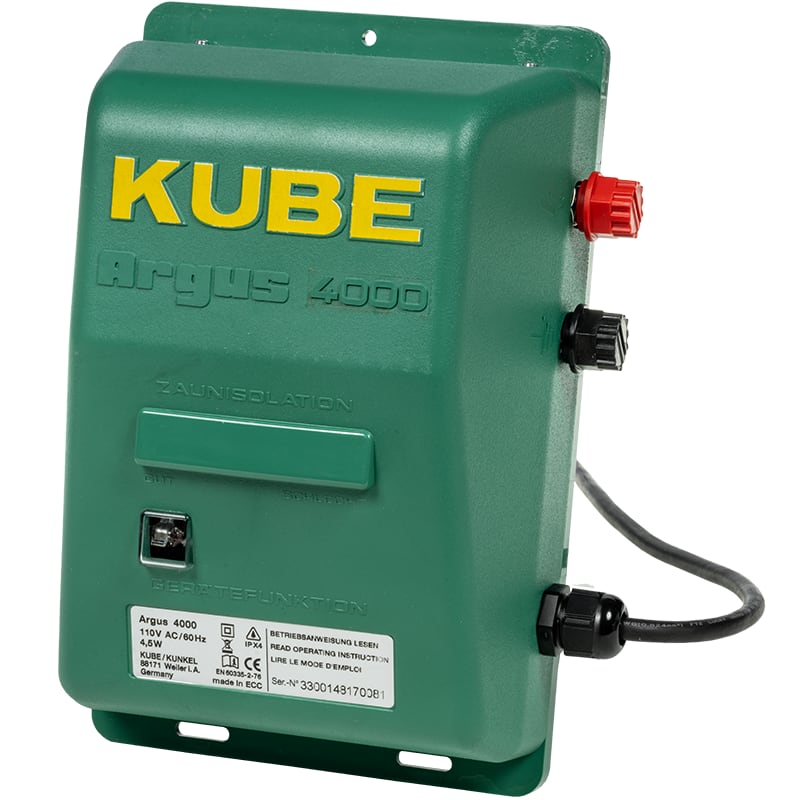
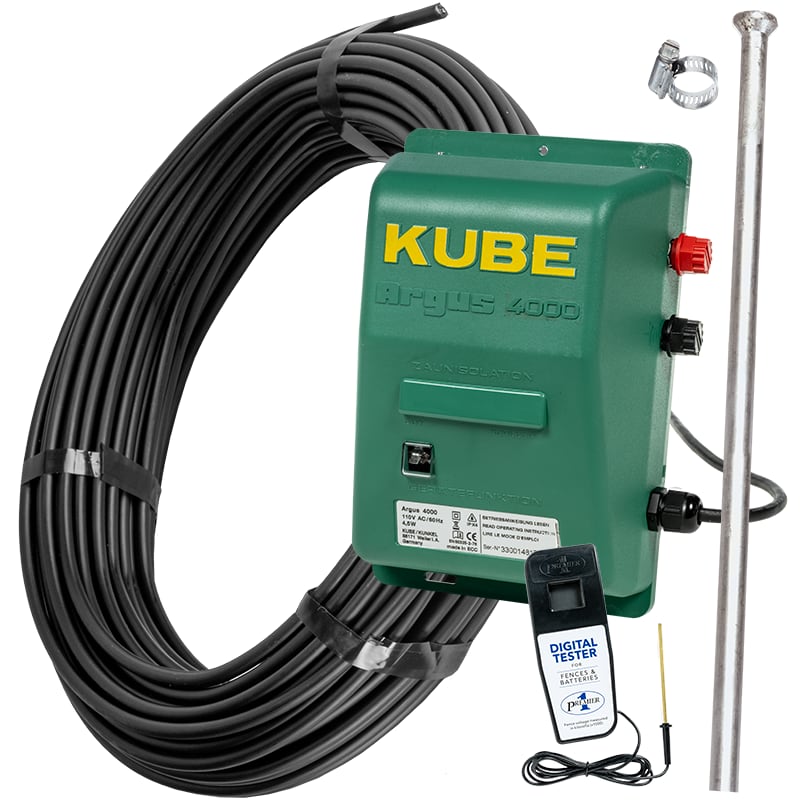
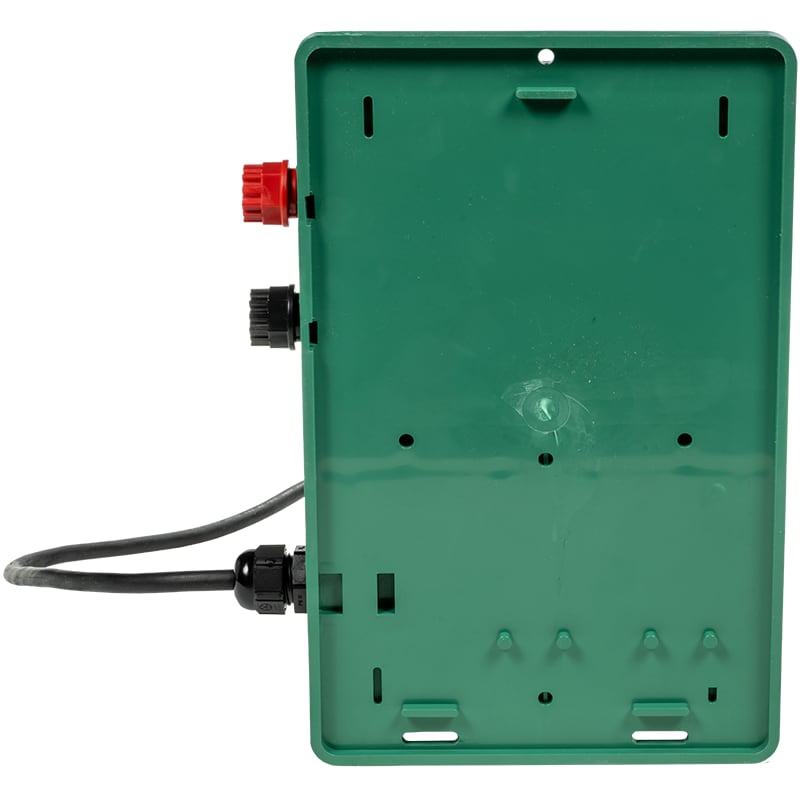
The Kube 4000 plug-in unit is economic and wide-impedance. That means it produces unusually high pulse outputs in fences over dry soils. It performs better than standard low-impedance units during dry/snowy seasons and on fences for deer, poultry and goats.
It's proven, over the past 5 years, to offer reliability and excellent value.
 View a comparison chart »


Instructions/Diagrams:
 Instruction Manual
Common Uses
Specs
| Energizer Only | Plug-in Kit* | |
|---|---|---|
| Item # | 115110 | 115111 |
| Kube 4000 Energizer | ✔ | ✔ |
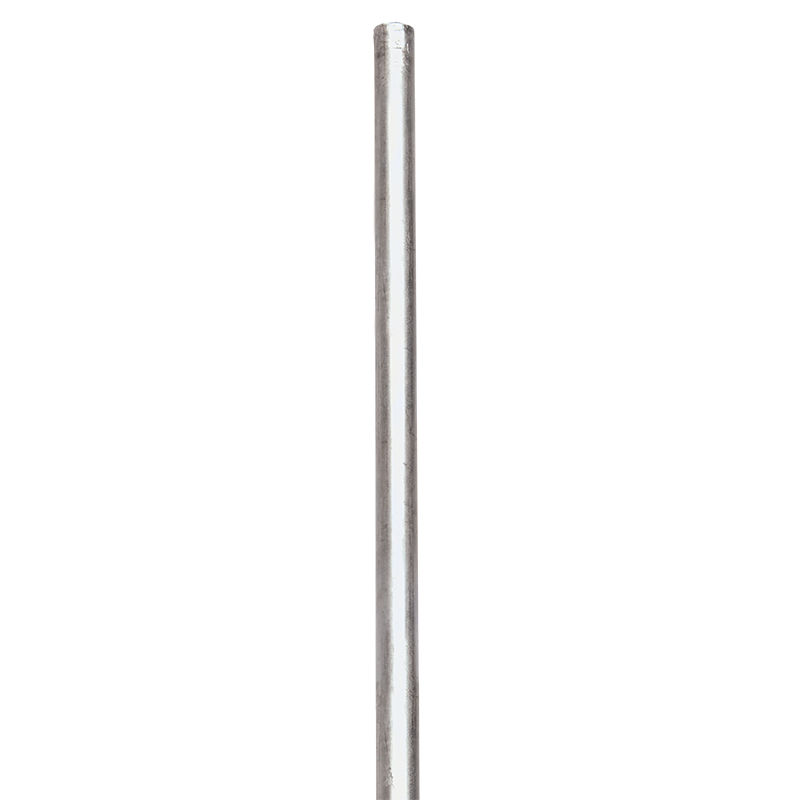
| (1) Ground Rod (galvanized) | 6 ft | |
| (1) Ground Rod Clamp | ✔ | |
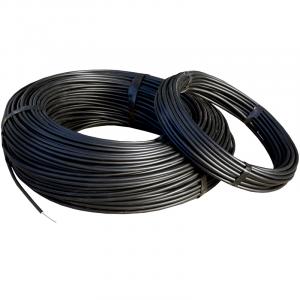
| MaxiShock Insulated Cable | 100' roll | |
| Digital Tester | ✔ |
Should Power**
- 3 miles of 3 strand cattle fence
- 1 mile of 5-7 strand sheep fence
- 15 rolls of 164' sheep/goat nets and 7 rolls of 164' PoultryNet
Miscellaneous
- Requires a grounding system. Inadequate grounding is the most common failure in an electric fence system. We recommend 6 ft. of grounding for this energizer, included in the kit.
Energizer Specifications
- 2.30 released joules
- 2.30 joules in moist soils
- 1.24 joules in dry soils
- Pulses per minute: 40
- 110V draw is 4.5 watt per hour
- Impedance type: wide – pulse type
- Input: AC only
- 6' cord
- Modular. Very easy to repair.
Benefits
Installation
- Connect insulated cable (stripped back 1 - 2" on ends) to the fence terminal on energizer, run the cable to the fence line and connect.
- Then run a second length of cable from the ground terminal (with ends stripped again) on the energizer to the ground rod.
- Secure to ground rod with a clamp.
- Plug the energizer directly into an outlet and test fence. Do not use an extension cord as it may cause a decrease in voltage and expose the unit to the elements.
- Unit indicator light should flash and a tic-tac sound will be heard. If the indicator light doesn't flash, then the unit should be serviced.
Precautions
To Reduce Risk & Liability
- Never place your head or upper spine near an electrified wire. Accidental head or neck contact can occur when pushing a voltage probe into the soil. Be careful when doing so to avoid head-to-wire contact!
- Never attempt to step over or climb through an energized fence of any kind.
- Never encourage anyone to touch an electric fence.
Troubleshooting
Start by measuring the voltage at the end of the fence line. If the voltage is below 3000V, follow these steps to determine if the problem is with the fence, or the energizer.
Test the energizer first!
- Turn off the energizer.
- Disconnect the wires going to the fence and ground stake/rod.
- Turn the energizer back on.
- Measure the voltage on the energizer between the two terminals (positive and negative) with a digital voltmeter or other high-voltage tester. Touch one end to “-“ (earth terminal) and the other end to “+” (fence terminal). The reading tells you how well the energizer is working without any other variables.
- If the tester reads below 5000V, then the energizer (or possibly the battery) is the problem. If the voltage is above 5000V, then the trouble lies with your fence.
If the energizer is at fault:
- Test the battery with a low-voltage tester; recharge if lower than 12.2 volts
- Check the grounding system
If the fence is at fault:
- Conductors touching another wire, steel post or the soil
- Broken or damaged insulators
Warranty
Listed below are recommended optional components or related items. Your particular situation may require alternative recommendations. Please call and talk to our consultants if there are any questions at 800-282-6631.
-
Fence Connectors and Accessories
Digital Voltmeter
Item #132000 -Accurately tests the voltage of an electric fence. Useful for troubleshooting energizer issues too.
$46.00 -
Fence Connectors and Accessories
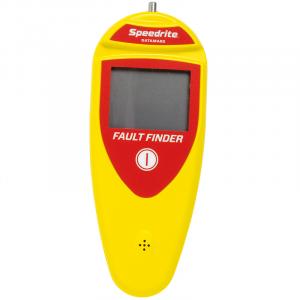
Fence Fault Finder
Item #133500 -Tests electric fences and determine fault locations with the press of the button. Save time in the field and reduce troublesome electrical shorts.
$119.00 -
Fence Connectors and Accessories
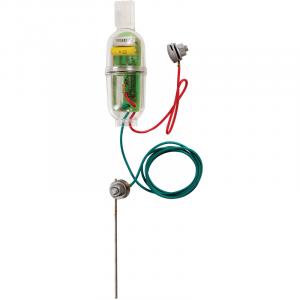
Live Fence Indicator
Item #133515 -For instant reassurance that your fence is working. Clip to your fence line and watch for the flash when you pass by. No batteries required.
$45.00 -
Fence Connectors and Accessories
BlitzLight™
Item #132300 -Flashes with every pulse over 3000V (the opposite of the Volt Alarm). For energizers 0.5 joule or larger.
$45.00 -
Energizer Solar Panels and Accessories
Galvanized Lightning Diverter
Item #156310 -Reduces risk of lightning damaging an energizer by redirecting the energy to the ground.
$11.00 -
Handling Equipment
Ground Rod and/or Connecting Pin, 3'
Item #151200 -Effectively ground energizers or firmly secure handling equipment. Galvanized pin is resilient to rust and wear.
$8.00 -
Fence Connectors and Accessories
Ground Rod, Galvanized, 6'
Item #151000 -Complete the circuit of your electric fence with galvanized grounds. No corrosion unlike copper rods.
$18.00 -
Fence Connectors and Accessories
Stainless Steel Clamp
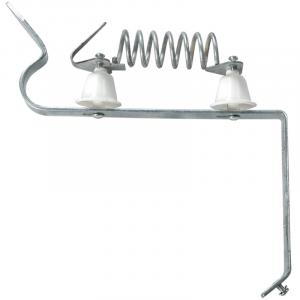
Item #151800 -Stainless steel hose clamp. Firmly holds negative leads from the energizer to the ground rod.
$1.30 -
Fence Connectors and Accessories
Cut Out Switch
Item #333000 -This reliable, single-throw cut out switch stops the flow of electricity from one fence to another.
$13.00 -
Energizer Solar Panels and Accessories
Double Insulated Wire, 50'
Item #164104 -Electric fence wire with thick layers of insulating for transporting high voltage pulses from the energizer to the fence line.
$22.00 -
Energizer Solar Panels and Accessories
Double Insulated Wire, 100'
Item #164107 -Electric fence wire with thick layers of insulating for transporting high voltage pulses from the energizer to the fence line.
$44.00 -
Energizer Solar Panels and Accessories
MaxiShock Double Insulated Cable, 50'
Item #164204 -Electric fence cable with thick layers of insulating for transporting high voltage pulses from the energizer to the fence line.
$20.00 -
Energizer Solar Panels and Accessories
MaxiShock Double Insulated Cable, 100'
Item #164207 -Electric fence cable with thick layers of insulating for transporting high voltage pulses from the energizer to the fence line.
$38.00 -
Fencing
Warning Sign
Item #346000 -Let passersby know that your fences are electrified with this easy-to-read electric fence warning sign.
$1.60







Write a Review
You must be logged in to leave a review. Please sign in.
David B from Ohio
We have 4 of these fence energizers in use. They have been relatively durable over the last 10 plus years. Several have been repaired for various reasons, some sent back and others repaired locally. We did after nearly 10 years have a serious problem. We started getting micro voltage feedback in one of our watering systems. Several electricians looked at the problem over the last year and a variety of things were done, but ultimately one of them looked up the stats on this system and contrary to the “kit” they recommend 3 ground rods spaced 10 feet apart. We did that and have had no further problems. Our other 3 units are doing well on 1 ground rod. Electricity is very difficult to deal with sometimes.
Lauren D from Louisiana
Works very well — we’ve had this for several years and needed to replace the cord that plugs into the outlet. I didn’t see it on the website, but if you call Premier 1 they do have the replacement cords for about $18. It looks very easy to repair.
Bob B from South Carolina
Great fence energizer and super fast shipping. Highly recommend!
Robert H from Colorado
Your documentation for installation of the electric fence and Kube energizer is grossly deficient. All parts should be labeled and identified; set up of the Kube should be documented and videoed. I can figure out how to do set up and deployment. BUT, I SHOULD NOT HAVE TO HESITATE ONE MOMENT wondering what this or that part is for, or that there are not included parts, like alligator clips for the energizer wire. I do not have time to waste scratching my head. I would not recommend Premier 1 for the electric fence.
Links to additional resources:
- How To Install Electric Netting
- Electric Net Installation (YouTube video)
- Installing a Plug-in Energizer (YouTube video)
Leslie T from California
I was worried about getting a good ground with our dry soil but tried the Kube with the existing ground rod from my old fence charger. I was also worried about using a pulsing charger for my mules and horses in winter as their coats are very thick, so I chose an energizer with a stronger charge. It has worked perfectly and the animals are very respectful of it.