

Poultry
Fence Solutions for Chickens, Ducks & Geese
What is poultry netting?
It’s an electrifiable, prefabricated, portable fence. Arrives to your door as a complete roll with built-in line posts. It’s lightweight too! Most rolls weigh less than 20 lbs. Attach an electric fence energizer (and ground rod) and it’s ready to keep poultry in, and predators out. Electric netting is easy to install and move.
Electric fence doesn’t have to be intimidating…
Many folks new to electric fence are “turned off” by terms like “voltage” and “resistance”. Don’t worry… Premier’s on-farm staff will help you make sense of it.
How does netting work?
The horizontal strands are energized (except for the bottom one that rests on the grass) by a fence energizer. When chickens or ground-based predators touch it, they receive a high-voltage shock from the brief electric pulse—and learn to avoid it.
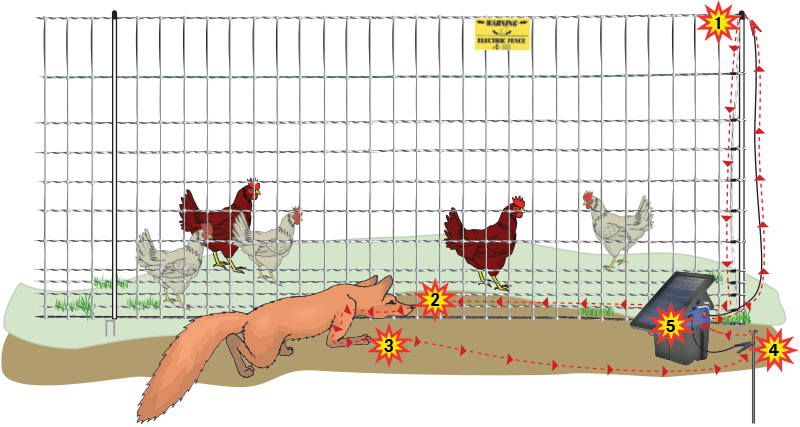
Why is electric netting so popular?
- Arrives to your door as a complete, preassembled fence. Line posts are built in to each roll.
- Keeps in adult poultry.
- Keeps out ground-based predators (if properly energized) like dogs, coyotes, raccoons, skunks, foxes, opossums and bear.
- Much easier and faster than other fences to install, adjust, relocate and remove. Takes less than 10 minutes to install a roll. This can be done alone, but handling tall and long rolls is easier with two people.
- Flexible. Unlike permanent fences, netting is easy to install around corners and curves, into valleys and over hills.
- No tools needed! Only hand-tensioning is required. FiberTuff™ posts can be used for extra support at corners and ends.
- Endures. A roll will last 10 seasons if used with care. Its chief enemies are lawn mowers and ice/heavy snowfalls.
- Aesthetic. Unsightly chicken wire is difficult to install and remove, whereas electric netting can be easily stowed when not used. Green is available for those who prefer to have the fence blend into the background or landscape.
What users dislike about it...
- The fence line must be mowed when green grass covers the lowest “live” strand. The alternative is to apply a strip of herbicide to kill weeds.
- Ice and heavy snow can flatten and thereby damage it. That’s why most choose to store netting fences for the winter.
- High wind can lean it over.
- Electric netting will sag without support posts at corners and ends. “Plus” nets include additional line posts to reduce sag (in exchange for added weight.) Less sagging = more eye appeal and less ground contact.
- Won’t stop aerial predators (e.g. hawks, eagles, owls, etc.) Tip: Set up narrow runs to reduce flying predators’ swooping ability.
- Animals may become entangled in it—and die. On a % basis, entanglement is very rare, but it can and does occur.


What’s the best fence energizer?
Poultry, due to the nature of their legs and minimal body weight, have much higher resistance to electricity than a cow, horse, pig or dog. And the fence, due to its low-to-the-ground nature, is prone to high weed contact. So low output units (such as those sold in farm stores) usually disappoint. We recommend using a pulse-style 0.6 joule unit or larger for up to 3 rolls of PoultryNet®. Units with less joule output may work for 1 to 2 rolls of netting if grass contact is kept to an absolute minimum.
All-in-one Solar
Energy input is battery (DC) that is recharged by a solar panel that is attached directly to the energizer case.
- Solar units are very portable and quick to set up, operable in minutes
- No buried lead-out wires or underground cables are required
Plug-in & Battery
Energy input is 110V AC (plug-in) or battery (DC).
- Best for use in shaded areas
- Less expensive than all-in-one solar units
- Less visible for vandals and thieves
What about grass contact?
This is netting’s biggest negative. Too much green grass or weed contact lowers the voltage of the fence. To overcome:
- When grass gets 6" high, mow along the fence. If you mow into the fence, your wallet, the mower and the net will regret it! Move the net into the mowed strip by removing and reinstalling one post at a time. Takes approx. 5 minutes per roll of net.
- Or spray herbicide in a narrow strip under the fence. No herbicide lasts forever so expect the weeds to return in time. We prefer burn-down chemicals that don’t kill perennials.
- Or buy an energizer with enough joule output to cope with extra weed contact.
A good rule of thumb is to buy an energizer with more joule output than you’ll think you need. When the fence pleases, most folks will buy more fence—and need additional output.
Which is the best height?
While both heights contain most poultry, the 48" net is perceived as more secure against coyotes and dogs. However, the shorter 42" net is lighter and easier to handle when installing and removing. It’s also less expensive.
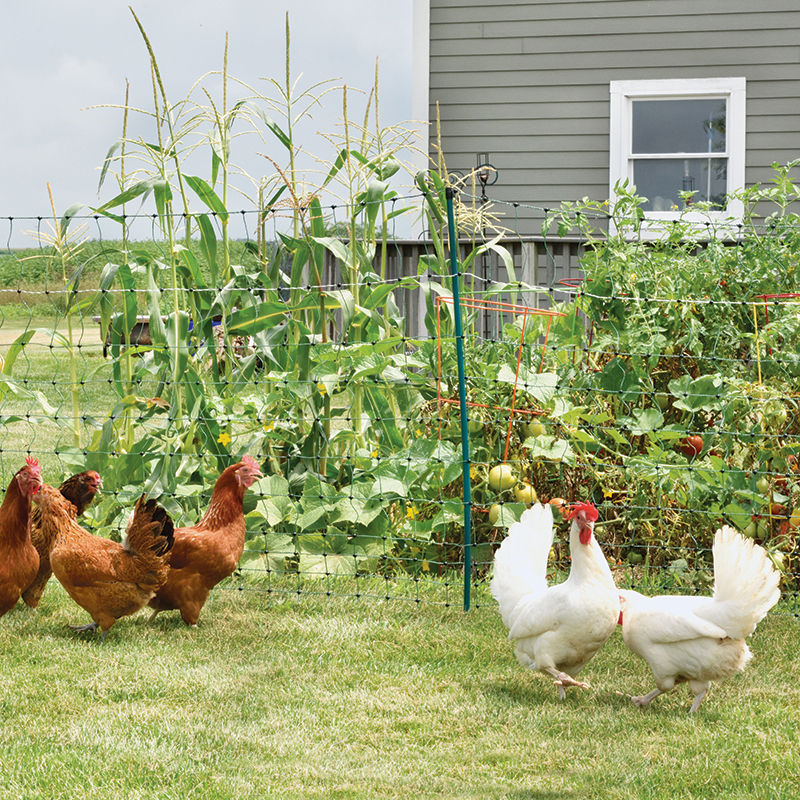
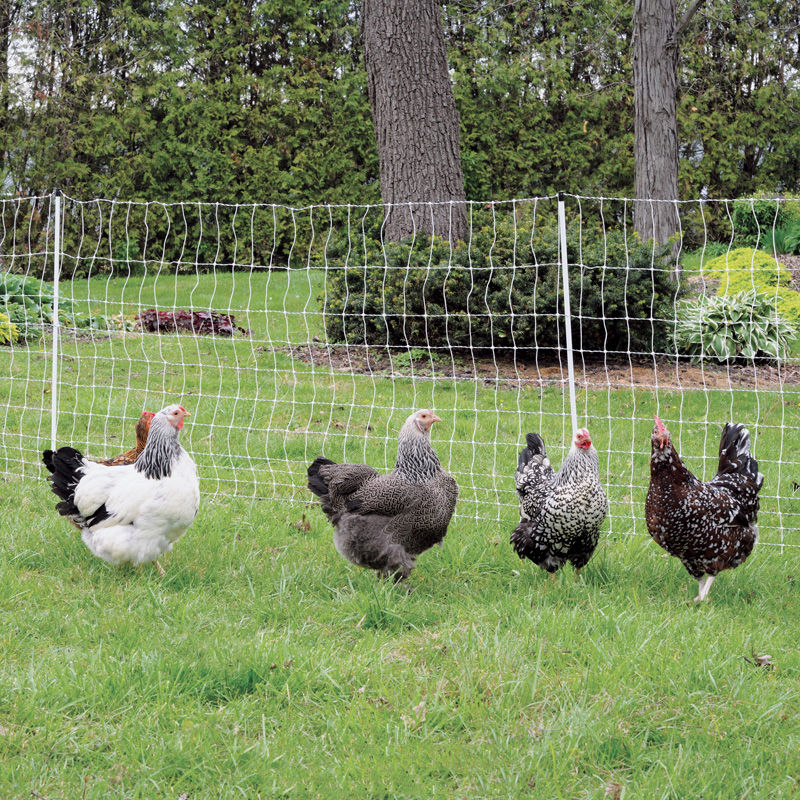

Won’t chickens fly over the fence?
Birds will fly over the fence if there is insufficient feed, too crowded, or if they’re trying to avoid fights. Some hens are just plain stubborn and refuse to “get with the program”. When first let out in the morning, watch for the hen that gets out first. She’s the lead troublemaker and prime contender for clipping.
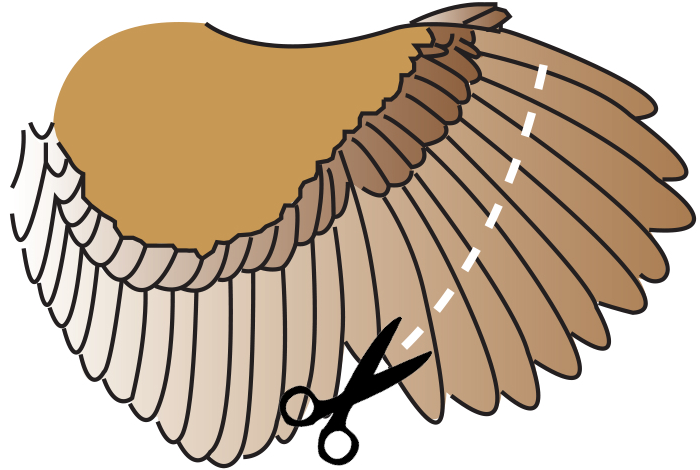
If there’s an escape problem, we find it’s usually led by a hen or two with the rest simply following along. Identifying her and clipping the flight feathers on one wing usually solves this problem. This does not have to be done for the whole flock.
Clipping wings doesn’t hurt the bird, but reduces its ability to take flight over 42"–48", not the 18"–24" needed to access nestboxes or roosts.
Note: Electric poultry netting won’t stop young birds small enough to slip through the 2" net openings. For the first weeks when birds are small, we suggest keeping them inside the coop or making a small temporary pen with NoShock Chick Fence inside the electrified netting for predator protection. Also look to the NoShock™ Hen Pen which features a non-electrifiable chick-tight mesh along the bottom. The Hen Pen is best when used as a monitored day pen for adult birds and chicks.
Not sure what you need?
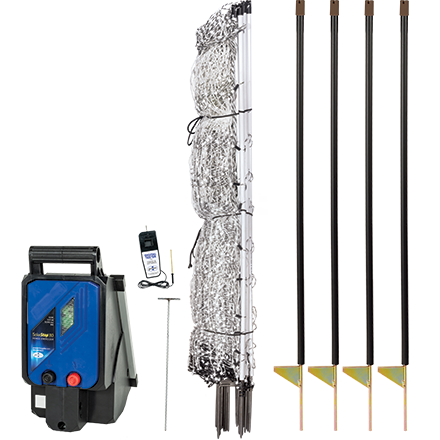
Try our electric fence kits
Why? Because all the parts and pieces necessary are included. You don’t have to worry about overlooking the key extra items that folks new to electric fence normally need to make an electric fence operational.
If your plans involve longer fences, bypass the kit option and instead buy the individual parts and pieces—because the items needed are likely to vary considerably.
To Reduce Risk and Liability...
Are electric fences a serious safety risk to humans?
Because touching an electric fence is painful and the voltages are high, most assume that the risks from an energized fence must also be high. That’s a myth. Consider that millions of people throughout the world are “exposed” to millions of electric fences every day—yet they are involved in (but are not always the cause of) less than one human death or serious injury per year worldwide. Compare that to the number of annual injuries and deaths that occur from human exposure to tractors, skid loaders, ladders, PTO shafts, balers, mowers, combines, bulls, stallions, rifles, shotguns, knives, etc. This is not to suggest that there is no risk at all. There is, indeed, a small level of risk. And with risk, there is also liability to the fence’s owner.
For safer electric fences:
- Make them visible to humans and animals. Visibility is increased by contrast. (That’s why many Premier nets are black and white in color.)
- Educate. Hang warning signs on all electric fences. Tell children to never touch it. Everyone should avoid head and neck contact.
- Allow space for people and animals to walk easily along or around it.
What NOT to do!
- Never place your head or upper spine near an electrified wire. Accidental head or neck contact can occur when pushing a voltage probe into the soil. Be careful when doing so to avoid head-to-wire contact!
- Never attempt to step over or climb through an energized fence of any kind.
- Never encourage anyone to touch an electric fence.
- Do NOT use an energizer that is labeled high impedance, continuous current, weed burner or weed chopper. We recommend only low or wide impedance pulse energizers.
Warning!
In 1991 an accidental fatality occurred when a young child’s head contacted an electrified fence while the child was crawling on wet grass. The fence was correctly installed and functioning properly. The energizer was a UL approved unit. As a result, Premier strongly advises against allowing toddlers access to any electrified fences. Also, due to this incident and others, experts now suggest that human contact by an energized wire to the head and neck may be the most dangerous point of contact. We urge all to especially avoid this kind of contact.