

Livamol® with BioWorma®
Product Details


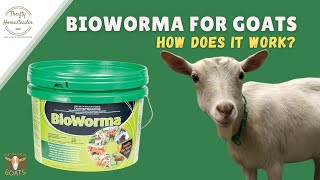
A feed supplement to control the spread of parasitic larvae in the pasture. Livamol® with BioWorma® contains a naturally occurring fungus that captures and consumes infective worm larvae (including chemical and anthelmintic resistant larvae) within the manure of grazing animals. BioWorma® is effective when fed to sheep, goats, cattle, horses and others—including deer, alpacas and zoo animals.
 California Residents: Proposition 65 Information

Instructions/Diagrams:
 Data Sheet
Benefits
Duddingtonia flagrans reduces the number of gastrointestinal nematodes (GIN) larvae on pasture, which is significantly greater than a chemical wormer can do within the animal. Overall averages below:
68% – SHEEP | 86% – GOATS | 81% – CATTLE | 84% – HORSES
Note: BioWorma® consumes larvae from the pasture, reducing the possibility of reinfection. It does not eliminate parasites present in the animal. Animals need to be treated with a dewormer/anthelmintic to remove the internal parasites.
Common Questions
- If I feed BioWorma® for 3 months will it establish on my farm?
- No. Once the fungus has consumed the larvae in the manure it will die.
- Is BioWorma® affected by seasonal change?
- BioWorma® is recommended for strategic use during periods when weather conditions are conducive to larval development and transmission onto pasture at temperatures above 40°F (5°C).
- Does it affect dung beetles or earthworms?
- There are no negative effects on non-target soil nematodes, earthworms, microarthropods, soil bacteria and fungi. Beneficial insects feeding or breeding on manure (e.g. dung beetles, fly larvae) are not negatively affected.
- Can I feed it to pregnant ewes?
- There are no precautions for feeding to pregnant animals.
- What's the difference between BioWorma® and Livamol® with BioWorma®?
- BioWorma® is a concentrated feed additive that is mixed into the feed (or other supplements). Livamol® with BioWorma® is a feed supplement premixed with BioWorma® and top dressed over the animals' feed.
Specs
Active Ingredient
- Duddingtonia flagrans strain IAH 1297* 2.200%
Guaranteed Analysis
- Crude Protein, min 20%
- Crude Fat, min 5%
- Crude Fiber, max 16%
- Calcium, min 4%
- Calcium, max 6%
- Phosphorus, min 1.5%
- Fluorine, max 0.025%
- Vitamin A, min 27,000 IU/lb
- Vitamin D3, min 54,000 IU/lb
- Manganese, min 104 ppm
(*) Contains a minimum of 30,000 Colony Forming Units/gram of active ingredient.
Ingredients: Plant Protein Products, Processed Grain By-Products, Dicalcium Phosphate, Calcium Carbonate, Sugar, Cane Molasses, Fish Oil, Propylene Glycol, Benzoic Acid (preservative), Manganous Oxide, FD&C Blue No. 1, Butylated Hydroxytoluene (preservative), Vitamin D3 Supplement, Vitamin A Supplement, Copper Sulfate, Zinc Oxide, Citric Acid (preservative), Salt, Sodium Phosphate, Vitamin B12 Supplement, Riboflavin, Pyridoxine Hydrochloride, Thiamine Mononitrate, Cobalt Sulfate, and Sodium Iodide.
Biological control with Duddingtonia flagrans is applicable to the larvae of:
- Sheep and Goats
- Barber’s Pole Worm or Wire Worm (Haemonchus spp.), Black Scour Worm or Hair Worm (Trichostrongylus spp.), Brown Stomach Worm (Teladosagia (Ostertagia) spp.), Nodule Worm (Oesophagostomum spp.), Thin-necked Intestinal Worm (Nematodirus spp.) and Hookworm (Bunostomum spp).
- Cattle
- Barber’s Pole Worm or Wire Worm (Haemonchus spp.), Brown Stomach Worm (Ostertagia spp.), Black Scour Worm or Hair Worm (Trichostrongylus spp.), Hookworm (Bunostomum spp.), Intestinal Worm (Cooperia spp.), Thin-necked Intestinal Worm (Nematodirus spp.), Nodule Worm (Oesophagostomum spp.).
- Horses
- Large strongyles (large red worms), including Strongylus spp., Triodontophorus spp. and Oesophagodontus spp.,small strongyles (small red worms or cyathostomes), including Cyathostomum spp., Cylicocyclus spp. and Cylicostephanus spp., Stomach Hair Worm (Trichostrongylus axei), Ascarids (Parascaris equorum), Threadworms (Strongyloides westeri) and Pinworms (Oxyuris equi).
How To Use
Daily Dosage Rates for Grazing Animals
| Bodyweight | Dose | Cost Per Animal Per Day* |
|---|---|---|
| 50 lbs | 0.8 oz | $0.23–$0.29 |
| 100 lbs | 1.6 oz | $0.46–$0.58 |
| 200 lbs | 3.2 oz | $0.93–$1.16 |
| 400 lbs | 6.4 oz | $1.85–$2.32 |
| 500 lbs | 8.0 oz | $2.32–$2.90 |
| 750 lbs | 12.0 oz | $2.78–$3.48 |
| 1,000 lbs | 16.0 oz | $3.70–$4.63 |
| 1,200 lbs | 19.2 oz | $4.63–$5.79 |
(*) Costs are provided as an estimate only. Qty. purchased and freight charges may affect final pricing.
USE RESTRICTIONS: Not for use in medicated feed. Not for use in free-choice feed. Do not feed undiluted. Not for direct consumption. Intended for further mixing into feed.
Shepherd’s Choice™ Management Tip
Livamol® with BioWorma® has a small particle size and is somewhat sandy in texture. To increase palatability and adhesion when feeding with grain, first process grains so they too have a smaller particle size. Or add moisture so the grain and supplement stick together. To start, add moisture at 1% of the daily feeding. For reference, a gallon of water weighs 8 lbs. A quart of water will treat 200 lbs of grain. If mixing daily, you can increase the moisture, possibly up to 5%. Another option would be to add diluted molasses to help it stick to the grain to encourage animals to consume the product.Tips
- For best results, treat animals with a suitable oral, injectable, or pour-on wormer/anthelmintic to rid the animals of worms, then begin administration of Livamol® with BioWorma®.
- Move the treated animals onto low worm pasture (that is, pasture that has not been grazed by the same animal species for a minimum of 6 weeks).
- The most worm-susceptible are young animals (from 3 months up to 18-24 months of age) and periparturient females (last month of pregnancy and while producing milk) as they are the most likely to have less resistance to worm infestation due to low immunity. Do not underestimate pasture contamination by adult stock, even animals with low fecal egg counts (FECs), considering the volume of fecal material adult stock place on pasture.
- Thoroughly mix the Livamol® with BioWorma® with feed, and commence daily administration of the resultant mixture to minimize pasture infectivity and maintain the low worm status of the animals.
- Livamol® with BioWorma® will begin to work within the first day and may be fed continuously when warm, moist climatic conditions are conducive to parasitic nematode activity.
- Livamol® with BioWorma® is for use during periods when conditions are conducive to larval development and transmission onto pasture at temperatures above 40°F (5°C).
- Use Livamol® with BioWorma® in conjunction with the specified worm management strategy for your area by contacting your veterinarian or animal health advisor. It is important to consider the principles of refugia.
- Periodically check the worm burden and monitor the effectiveness of the worm management system. Options include fecal egg counts (FECs), the fecal egg count reduction test (FECRT) and/or identifying worm species by using fecal larval cultures (FLCs). Re-treatment with an effective chemical wormer may be indicated (consult your Veterinarian).
Questions? Ask a sheep expert for advice.
Shipping
Item #780237 and #780238 are eligible for FREE Ground Delivery within the contiguous USA when ordering $100 or more of qualifying items.
Truckload pricing (10 pails or more) is available by request. Please contact us online or call 800-282-6631 for a quotation.
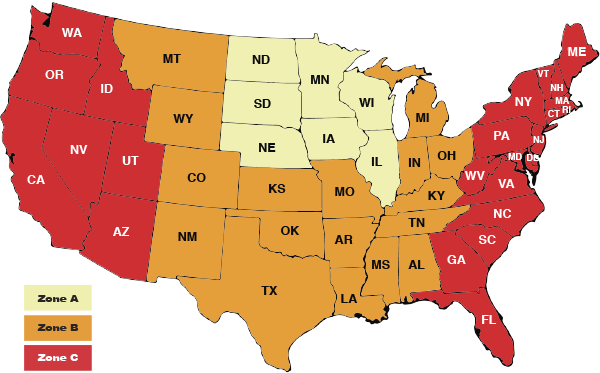
Estimated Cost for LTL Shipments
| # of Pails | Weight | Shipping Cost | ||
|---|---|---|---|---|
| Zone A | Zone B | Zone C | ||
| 30 lb Pails | ||||
| 10 | 300 lbs | $152 | $175 | $230 |
| 20 | 600 lbs | $304 | $350 | $460 |
Precautions
Can cause serious eye irritation. Wear protective gloves, protective clothing, eye protection and face protection.
Due to safety and quality concerns, we cannot accept returns on opened, used or perishable livestock feed products. This helps prevent biosecurity risks, contamination and mold. Unopened items in original packaging may be returned if in resalable condition.
-
Buckets
Aluminum TurboScoop, large
Item #938361 -Versatile utility scoop with a front-facing handle. Easy to use and kind to wrists. Strong and rust-proof, ensuring it remains a reliable tool for years.
$24.00 -
Buckets and Troughs
Aluminum TurboScoop, small
Item #938360 -Versatile utility scoop with a front-facing handle. Easy to use and kind to wrists. Strong and rust-proof, ensuring it remains a reliable tool for years.
$17.00 -
Buckets and Troughs
PortaTrough™ 5
Item #938000 -Portable 5 ft feeder withstands all weather and animal conditions. Stackable for easy movement and storage.
$98.00 -
Waterers and Accessories
PortaTrough™ 3
Item #938010 -Easy to clean 3 ft livestock feeders used to provide grain, minerals, salt or water. Stackable for easy movement and storage.
$56.00 -
Buckets and Troughs
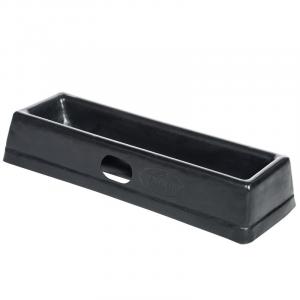
GoatTuff Feeder
Item #938020 -Durable trough feeder designed specifically with goat behavior in mind. Reduces waste and promotes animal safety.
$39.00 -
Buckets and Troughs
Rubber Pan (without handles), 3 gallon
Item #999610 -Rubber feeding and watering pan for livestock. Flexible and sturdy through decades of use. 3 and 6.5 gallons.
$12.00




Write a Review
You must be logged in to leave a review. Please sign in.
Kamilla N from Alabama
In 2024, we lost 11 out of 25 goats to parasite problems. One of my changes was to start using BIOWORMA to help reduce the parasite eggs in the pasture from reinfecting my goats. If you can't rotationally graze your flock or herd, you need to keep the parasite load as low as possible. I have seen a lower incidence of anemia since I started giving BIOWORMA to my herds 10 months of the year (when the highs are above 40°F.) I am using less dewormer, and my goats have healthier coats and darker color.
I read some reviews and want to leave a few suggestions. My animals had to get used to the product — some needed training before they would consume it. I got a different container and measured the amount for the herd by weight, then marked that volume on the enclosed measuring cup because the cup's markings don't match the needed amounts.
Then I used sunflower or olive oil to make the product stick to their feed. Water or a molasses-water mixture will work too, but my goats don't prefer wet food, so the oil or straight molasses worked to get them used to it. It also helps if they are hungry. If they turn their noses up at it, then don't feed them the good stuff as often, and feed the BIOWORMA mix when they are hungrier. It will pay off! Now I can sprinkle just a little in a feed dish, and they fight for it.
Laura J from Virginia
I have been a Premier 1 customer and have used BioWorma on my sheep farm for the past year and a half. For me, BioWorma has become one of the important tools in the toolbox for managing barber pole worms, especially during the high-risk grazing season.
I am very concerned that we are now heading into the time of year when barber pole pressure becomes serious, and the product is not available. I have planned my parasite-management program around having access to BioWorma, and I am depending on it as part of my overall strategy.
I have switched temporarily to the Livamol/BioWorma product, but it does not appear to be as palatable as the BioWorma that I have had incorporated directly into my feed by the mill. That difference matters when you are trying to make sure sheep consume the correct amount consistently.
I would appreciate clear communication from Premier 1 about when BioWorma will be available again, whether this is a temporary supply issue, and what sheep producers should do in the meantime. For those of us who rely on this product as part of our parasite-control program, timing is critical.
I value the products Premier 1 provides, but this is a serious concern for farms heading into barber pole season.
Mary H from Maryland
The reviews of this product seem good. I got into using the Livamol with BioWorma, only for supply to dry up, and then had to start all over, so the first bucket was a waste. Product VERY expensive! Now I'm stressed about how many buckets to hoard, so when you run out again I'm not in the same situation. You need to contact us when supply is low. Bad marketing on your part. Like I said, this is my first year using the product instead of high dosages of ivermectin during bad season for barber pole, only to just now finish saving two of my goats who contracted barber pole. We will see if my feelings change. By the way, mix with applesauce and they will be knocking you down to eat it.
Brandeis P from Texas
I have been using this product for 2 years now. At first, it is difficult to use. I recommend YouTube -- it has tons of information on how to dose it correctly. We put it on top of the feed at a lower amount and worked our way up to a full amount. Now even when swapping feeds, you have to move them over slowly to something new. And it worked for us. Now they lick the bottom of the feeders till it's all gone. This isn't an overnight fix. It takes time, especially depending on your load amount. We use this as soon as spring shows up until the first freeze comes and stays. It's also very helpful when kidding time comes with the does. We find we have fewer issues with the kids having worm problems.
Barbara S from New York
Fast delivery!


 WARNING: This product can expose you to chemicals including Cobalt Sulfate, which is known to the State of California to cause cancer. For more information go to